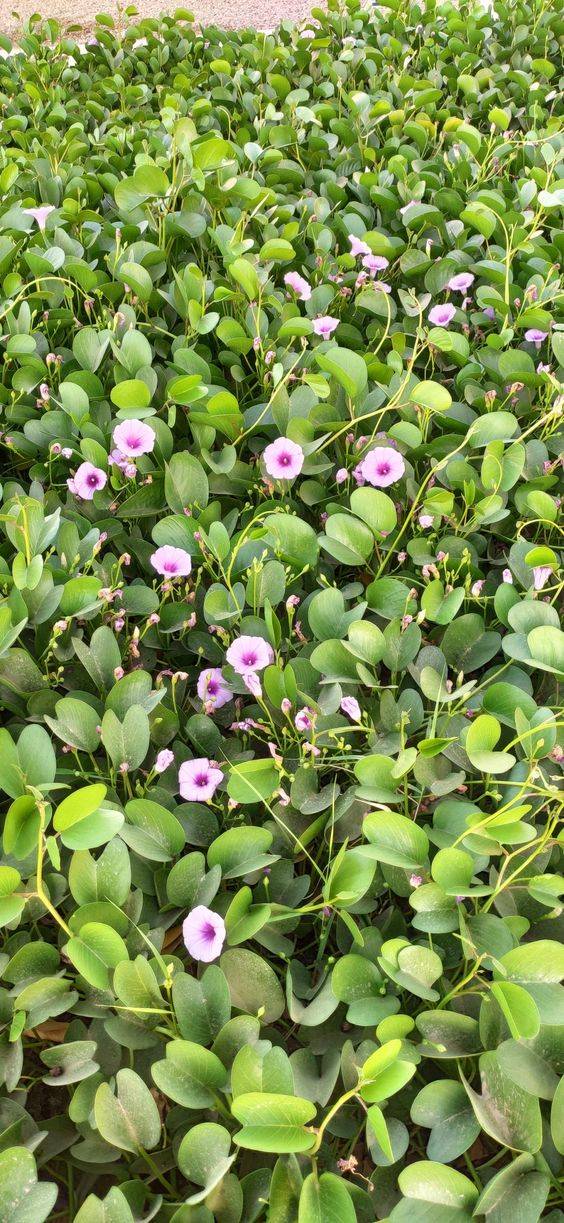
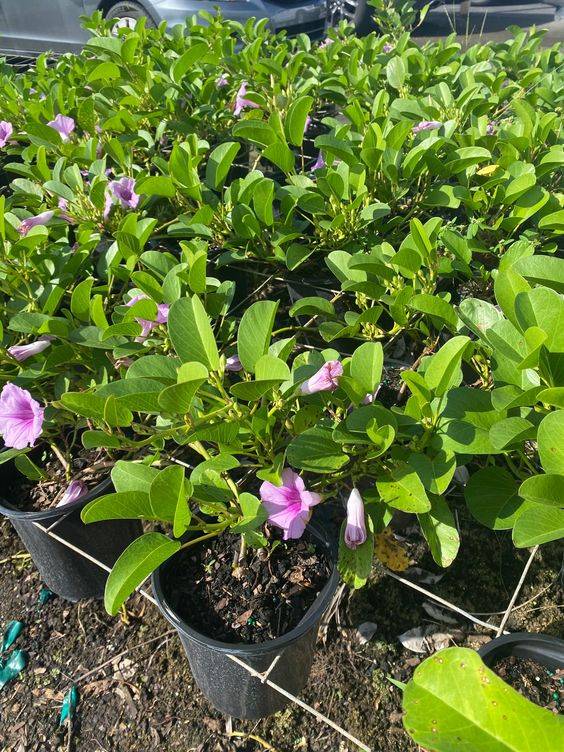
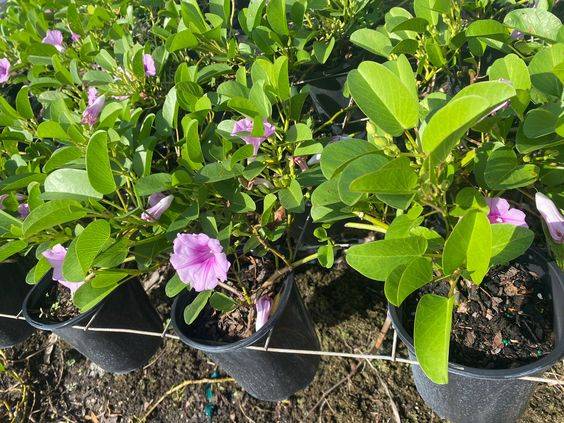
Ipomoea pes-caprae (Railroad Vine)

Ipomoea pes-caprae, also known as bayhops, bay-hops, beach morning glory, railroad vine or goat’s foot, is a common pantropical creeping vine belonging to the family Convolvulaceae. It grows on the upper parts of beaches and endures salted air. The plant has stout creepers and leaves that are shallowly 2-lobed, broadly orbicular, and coriaceous. The flowers are solitary or few in axillary cymes, with pink, funnel-shaped corolla that is approximately 5 cm across. The plant is found in sandy sea coasts and mangrove forests, also in the plains.
Planting: Ipomoea pes-caprae is best planted in a warm climate with well-draining soil that is rich in organic matter. The plant is drought tolerant and does not require much watering once established.
Fertilizing: You can fertilize the plant with a slow-release, balanced fertilizer in spring to help stimulate new growth.
Pruning: Ipomoea pes-caprae should be pruned in late winter or early spring before new growth emerges. Cut back the previous year’s growth to about 6 inches above the ground.
Overwintering: Ipomoea pes-caprae is tolerant to freezing temperatures, but it does lose its bright green color, turning brown after frost. If you want to overwinter it, protect it from frost by covering it with a thick layer of mulch or moving it indoors to a cool, dry location.
Pest and Disease Control: Ipomoea pes-caprae is not often bothered by pests or diseases and is generally rabbit and deer resistant.
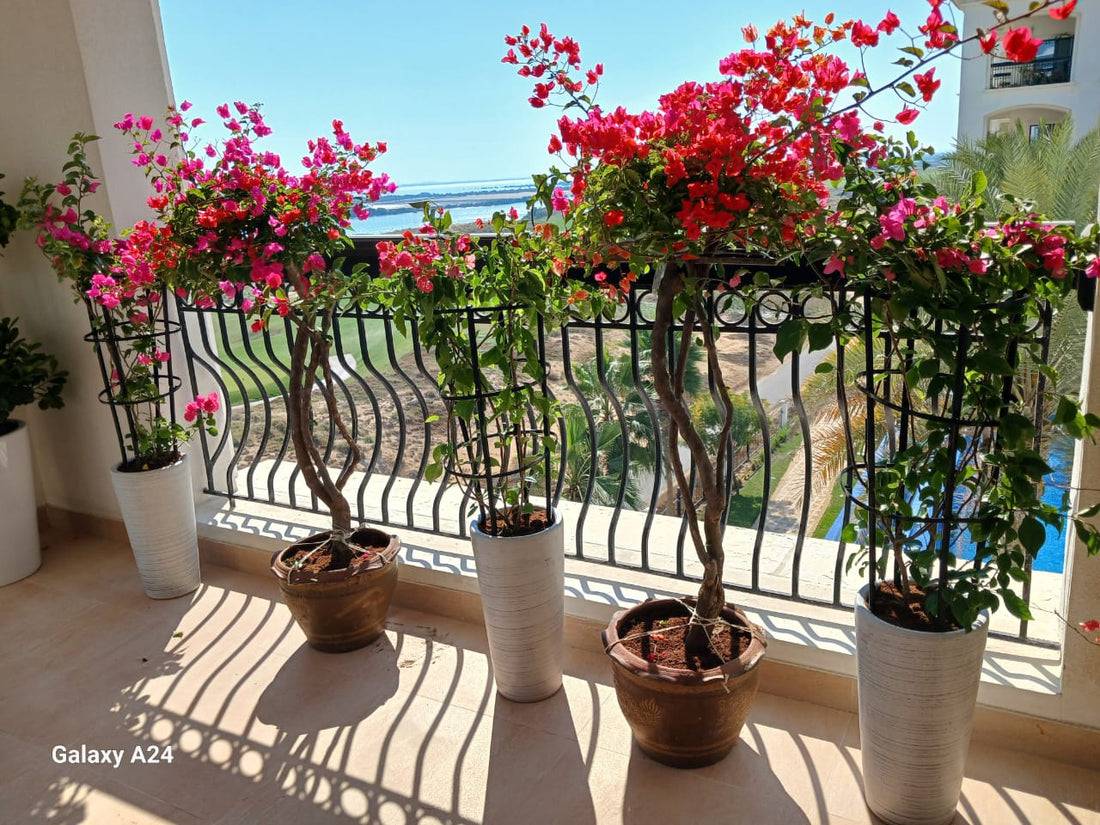
Uses: Ipomoea pes-caprae is ideal for creating a tropical look in your garden or landscape. It can be used as a specimen plant or planted in groups for a dramatic effect. It also looks impressive in containers and can be used as an indoor plant if given enough light .
Here are some step-by-step instructions for caring for Ipomoea pes-caprae:
Review
Related products
























Contact Info
- Address: Love gardens LLC , nursery warsan 3, Dubai
- Phone: +971 554899462
- Email: [email protected]