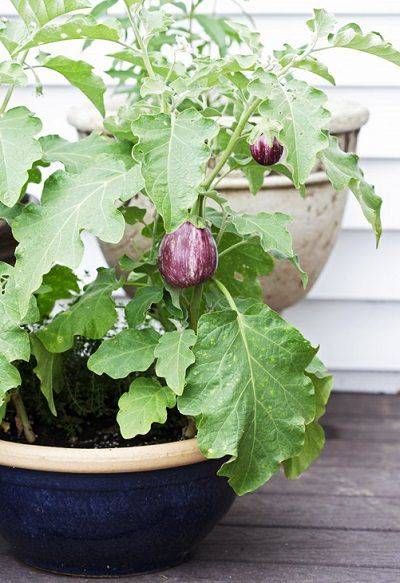
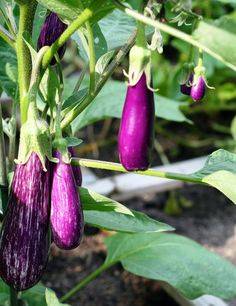
Egg Plant
Eggplant, scientifically known as Solanum melongena, is a tropical, herbaceous, perennial plant that is closely related to tomato and potato. It is grown worldwide for its edible fruit, which is typically used as a vegetable in cooking. The fruit is usually purple in color, but some cultivars are white and longer in shape. The eggplant plant has a branching stem and simple, long, flat, coarsely lobed leaves that are green in color and are arranged alternately on the branches. The stem is often spiny. The flowers are white to purple in color, with a five-lobed corolla and yellow stamens. The cut surface of the flesh rapidly turns brown when the fruit is cut open (oxidation). Eggplant grows 40 to 150 cm (1 ft 4 in to 4 ft 11 in) tall, with large, coarsely lobed leaves that are 10 to 20 cm (4 to 8 in) long and 5 to 10 cm (2 to 4 in) broad. Semiwild types can grow much larger, up to 225 cm (7 ft 5 in), with large leaves over 30 cm (12 in) long and 15 cm (6 in) broad.
Light: Eggplants require full sun to grow and produce fruit. They need at least 6 hours of direct sunlight per day.
Soil: Eggplants prefer well-drained soil with a pH between 5.5 and 6.5. They grow best in fertile, loamy soil that is rich in organic matter.
Watering: Water your eggplant plant deeply once a week, providing about 1 inch of water per week . Keep the soil consistently moist but not waterlogged.
Fertilizing: Fertilize your eggplant plant every two weeks with a balanced fertilizer (10-10-10) during the growing season. Alternatively, you can use a slow-release fertilizer at the beginning of the growing season.
Pruning: Prune your eggplant plant to promote bushier growth and increase fruit production. Pinch off the tips of the main stems when the plant is about 1 foot tall, and remove any suckers that develop in the crotch between the main stem and branches.
Pests and Diseases: Watch out for pests such as flea beetles, aphids, and spider mites, which can damage your eggplant plant. Common diseases include verticillium wilt, bacterial wilt, and powdery mildew.
Here are some step-by-step instructions for caring for eggplants:
Review
Related products





















Contact Info
- Address: Love gardens LLC , nursery warsan 3, Dubai
- Phone: +971 554899462
- Email: [email protected]